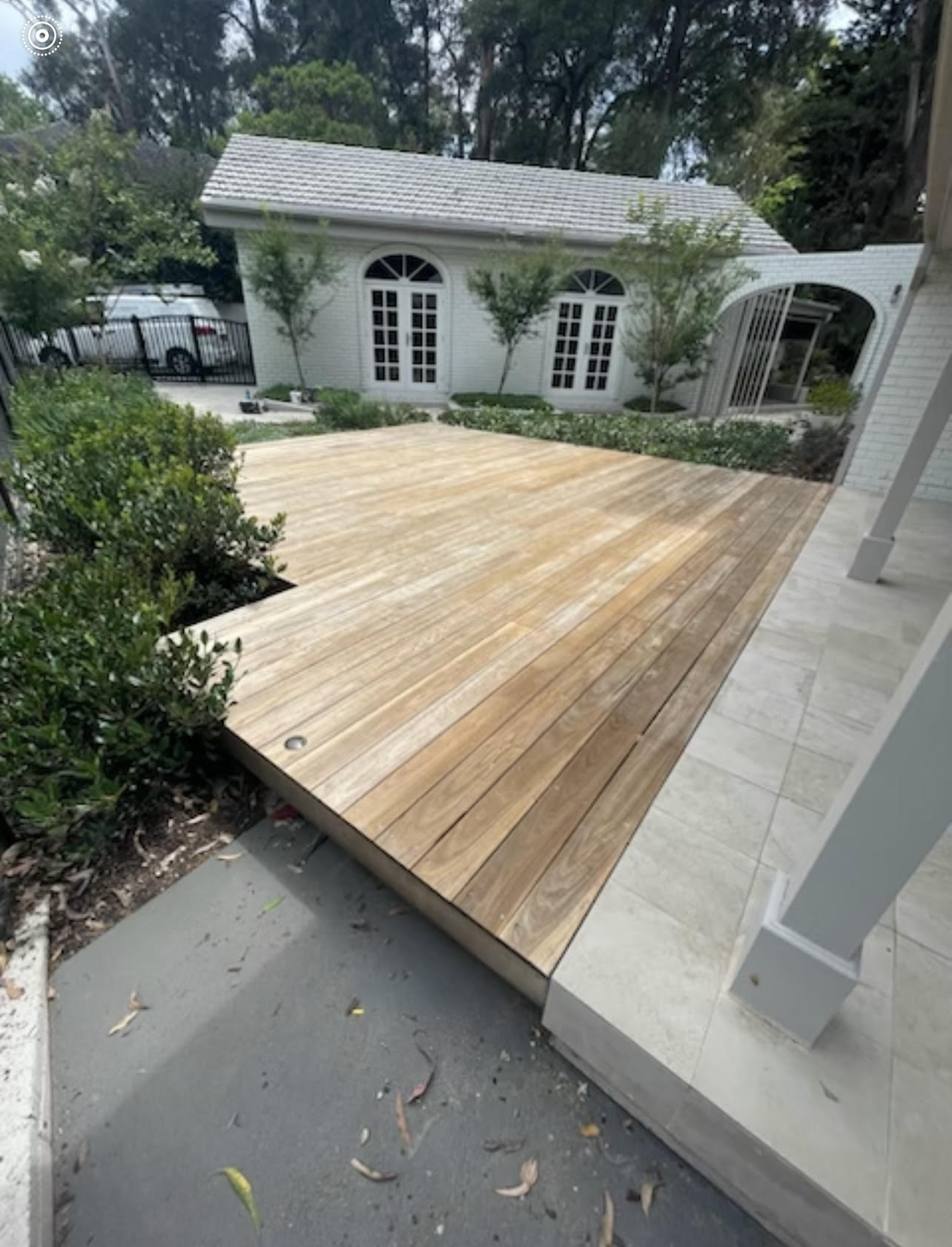
Timber deck restoration involves the revitalization of wooden decks to enhance their appearance, durability, and overall condition. The process typically includes several key steps:
1. Cleaning: Remove dirt, debris, mold, and old finishes from the deck surface. This step is crucial to prepare the wood for subsequent treatments.
2. Stripping: If there are previous coatings or finishes, a stripping agent may be applied to remove them, allowing for a clean surface for the restoration process.
3. Repair: Address any structural issues or damaged wood by replacing boards, securing loose components, or filling in cracks and gaps. This step ensures the deck is stable and safe.
4. Sanding: Smooth the surface by sanding, which helps eliminate rough patches and prepares the wood for the application of finishes.
5. Finishing: Apply protective coatings like sealers, stains, or paints to shield the wood from the elements. These finishes enhance the deck’s aesthetics while providing resistance to weathering, UV rays, and moisture.
6. Sealing: Seal the wood to protect it from water penetration, rot, and insect damage. This step is crucial for maintaining the longevity of the timber.
7. Regular Maintenance: Encourage the homeowner to perform routine maintenance tasks, such as cleaning and reapplying finishes as needed, to prolong the life of the restored deck.
Timber deck restoration not only improves the visual appeal of the outdoor space but also ensures the structural integrity of the deck, promoting longevity and usability. Properly restored decks contribute to a welcoming and functional outdoor environment